Professional Web Design Agency
A website is often the first place people go when they hear about a business.
They may find you through Google, an advertisement, social media, a recommendation, or even a business card. And once they reach your website, they make a quick judgement. Is this business trustworthy? Is the information easy to find? Does the website work properly on mobile? Can I understand what they actually offer?
These small things can decide whether someone contacts you or simply closes the page.
This is why website design is not only about making a website look attractive. A good website needs to work for the business behind it.
For many businesses, this is where hiring a professional web design agency can make a real difference.
What Does a Professional Web Design Agency Actually Do?
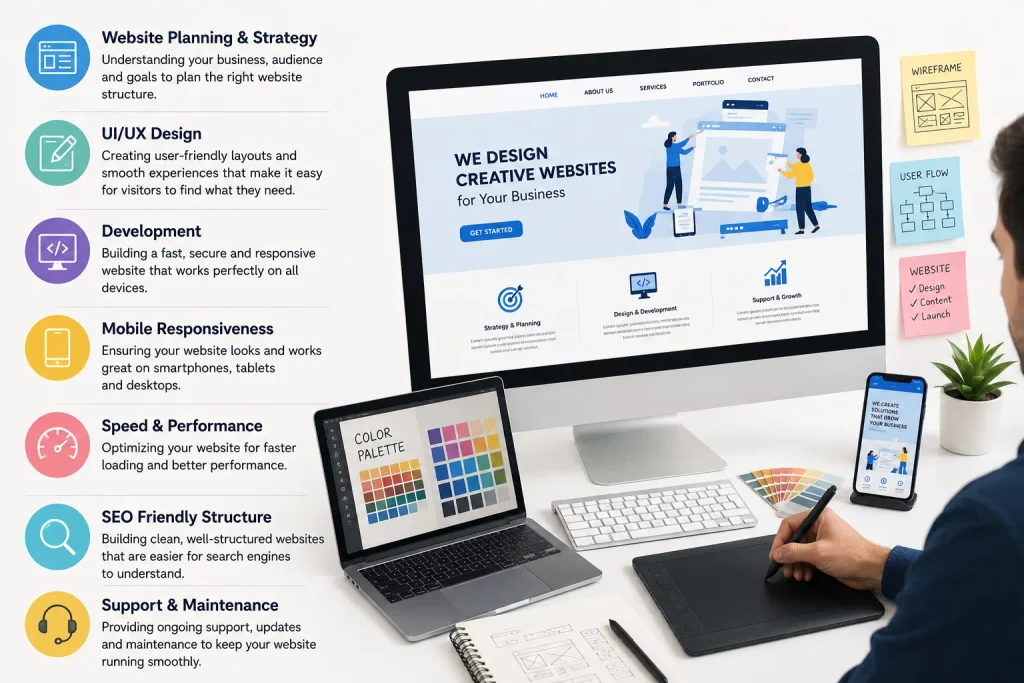
A web design agency does much more than choose colours, images and fonts.
A professional team looks at the complete website experience. This can include the structure of the website, page layouts, navigation, mobile experience, content placement, loading speed, calls to action and how visitors move from one page to another.
The goal is simple: make it easier for the right visitor to understand the business and take the next step.
For example, a service business may want visitors to request a quotation. An eCommerce business may want customers to purchase a product. A school may want parents to enquire about admissions.
The website should be built around that objective.
1. Your Website Represents Your Business
Think about visiting a physical office for the first time.
If the place is organised, information is easy to find and everything looks professional, you naturally feel more comfortable dealing with that business.
A website works in a similar way.
An outdated website, broken links, confusing menus or poor-quality images can create doubts even if the actual business is very good.
A professional web design agency can help make sure the website reflects the quality and personality of your business.
This doesn’t mean every website needs to look fancy. In fact, sometimes a simple website works better than one filled with unnecessary animations and design elements.
The important thing is that it feels right for the audience.
2. Professional Design Is About More Than Looks
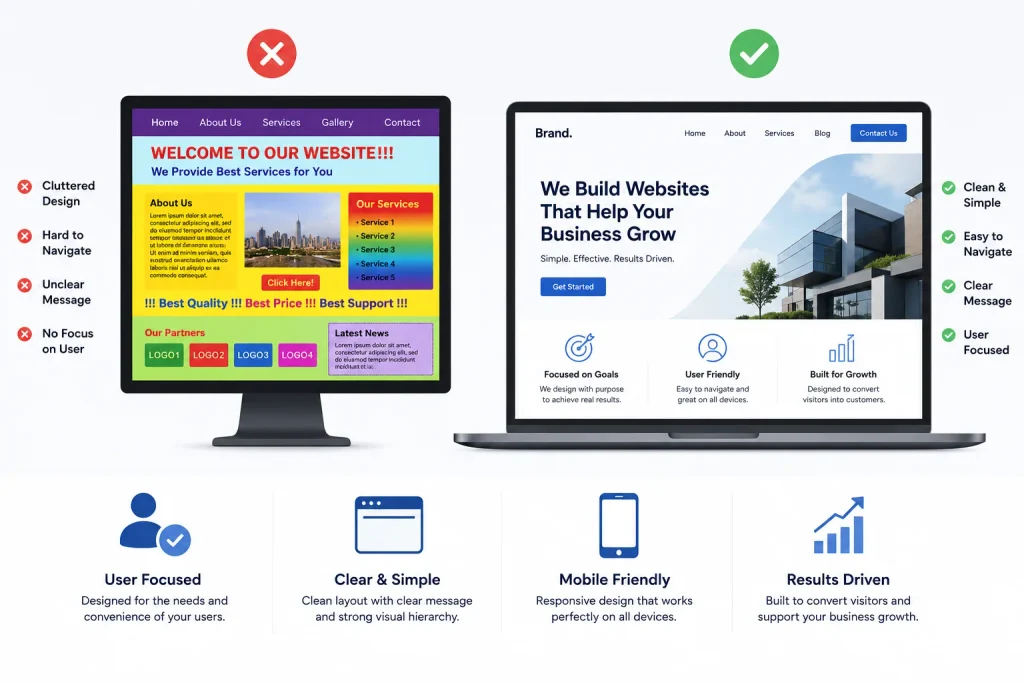
One common mistake businesses make is thinking that a “good-looking website” automatically means a good website.
It doesn’t.
A website can look beautiful and still be difficult to use.
For example, imagine a website where the contact button is difficult to find, the main services are buried under several pages, or visitors have to scroll through a huge amount of information before finding what they need.
That design may look impressive, but it isn’t doing its job.
Professional web designers think about usability as well as appearance.
They consider questions such as:
- What will visitors look for first?
- Which information should appear above the fold?
- Where should the enquiry button go?
- How many steps should someone take to contact the business?
- Is the navigation easy to understand?
- Does the website make sense on a mobile phone?
These details can have a bigger impact than simply choosing a better colour scheme.
3. Mobile Users Should Not Be an Afterthought
A large portion of website traffic today comes from mobile devices.
That means your website shouldn’t simply be a desktop website squeezed onto a smaller screen.
Menus, buttons, forms, images, text and page sections all need to work properly on mobile.
A visitor shouldn’t have to zoom in just to read your phone number or struggle to click a small button.
Responsive website design helps the website adjust to different screen sizes, including smartphones, tablets and desktops.
This is particularly important if you’re running paid advertising. If someone clicks your advertisement from their phone and lands on a difficult-to-use website, you may lose an enquiry that you already paid to acquire.
4. A Professional Website Can Support SEO
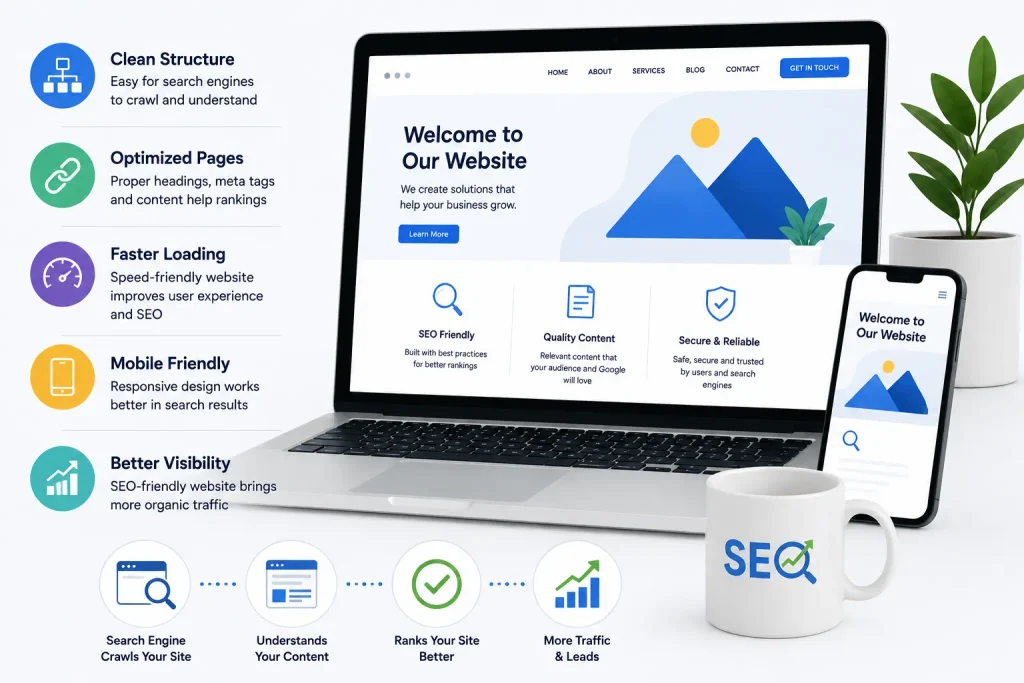
Website design and SEO are not exactly the same thing, but they are closely connected.
Search engines need to understand your website, while visitors need to be able to use it.
A properly structured website can make it easier to organise pages, create logical URLs, connect related content and provide useful information to visitors.
Technical elements such as mobile responsiveness, page speed, crawlability and proper site structure also matter.
This is one reason SEO should be considered during the website planning stage rather than several months after the website is launched.
At the same time, a new website should not be treated as a guarantee of rankings. Search visibility depends on many factors, including content, competition, technical health, authority and how useful the website is for users.
5. Your Website Should Help Generate Enquiries
A business website shouldn’t just tell people that your company exists.
It should make it easy for interested visitors to take action.
Depending on the business, that action could be:
- Calling the company
- Filling out an enquiry form
- Booking an appointment
- Requesting a quotation
- Buying a product
- Signing up for updates
- Sending a WhatsApp enquiry
This is where website structure becomes important.
A professional web design agency can place calls to action at relevant points instead of simply putting one “Contact Us” button at the bottom of every page.
The visitor should understand what to do next without having to think too much.
6. It Can Make Paid Advertising More Effective
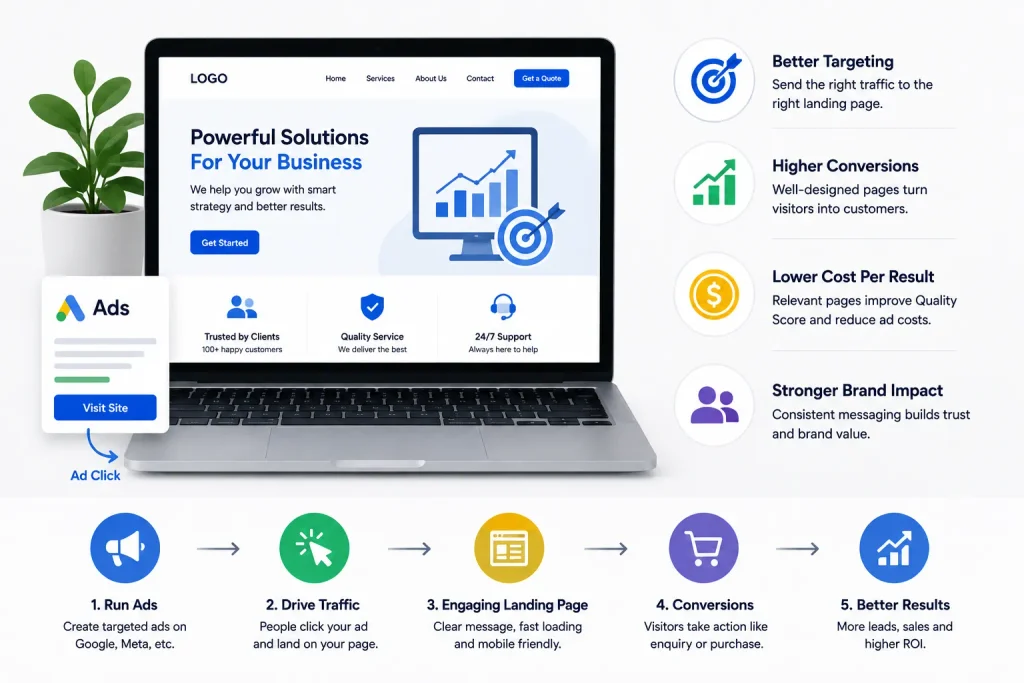
This is an area businesses sometimes overlook.
You can have a good Google Ads or social media campaign, but the advertising doesn’t operate in isolation. The person who clicks your ad eventually reaches a landing page or website.
Let’s say you spend money attracting 1,000 visitors through advertising.
If the website is slow, confusing or doesn’t clearly explain the offer, some of those visitors will leave without enquiring.
That means the problem may not always be the advertisement. Sometimes the website experience after the click needs attention.
A good website and a well-managed PPC campaign can work together.
Adworth Media, for example, provides performance marketing services covering campaign strategy, landing-page guidance, conversion tracking, A/B testing and budget optimisation across platforms such as Google, Meta, LinkedIn and YouTube.
This is why it makes sense to think about your website and advertising strategy together.
7. You Get a Website Built Around Your Business
Templates can be useful, especially for small businesses starting out.
But eventually, you may find that a generic template doesn’t quite match the way your business works.
A professional agency can create a website based on your actual requirements.
For example, an eCommerce store has different needs from a real estate company. A school website has different visitors from a manufacturing company.
The structure, content and user journey should reflect those differences.
A professional website doesn’t necessarily mean building everything from scratch. It means making sensible decisions about what your business actually needs.
8. Better Website Structure Makes Future Growth Easier
Businesses change.
You may add new services, enter another market, start selling online or create new marketing campaigns.
If the website was poorly planned from the beginning, making those changes can become frustrating.
A properly planned website gives you room to grow.
For example, you might initially have five service pages. Later, you can add dedicated landing pages, case studies, industry pages, blogs or new product categories without completely rebuilding the website.
This is one of those things you may not notice when launching a website, but you appreciate it later.
9. You Don’t Have to Manage Every Technical Problem Yourself
Website problems can appear at inconvenient times.
A form may stop working. A plugin may conflict with another plugin. A page may suddenly look different after an update. The website may become slower.
If you’re not technically experienced, finding the actual cause can take hours.
Working with a professional team gives you someone who understands the technical side of the website and can help with maintenance and troubleshooting.
This is particularly useful for businesses where the website is an important source of leads or sales.
10. You Save Time
Business owners already have enough things to manage.
Trying to learn web design, development, SEO, hosting, security, mobile optimisation and analytics at the same time can become a full-time job.
Hiring professionals allows you to focus on your business while specialists handle the website.
You still need to provide information, approve designs and give feedback. But you don’t have to become the person responsible for every technical decision.
What Should You Look for in a Web Design Agency?
Don’t choose an agency only because its portfolio looks attractive.
Ask a few practical questions before starting.
Do they understand your industry and audience?
They don’t necessarily need previous experience in your exact industry, but they should be willing to understand your customers and business model.
Do they think about mobile users?
Ask to see examples of websites they’ve built and check them on your phone.
Do they consider SEO?
Your website should have a sensible structure that supports future SEO work.
Do they understand conversions?
A website should have a clear purpose, not just attractive pages.
What happens after launch?
Find out whether they provide maintenance, technical support and updates.
Can they work with your existing marketing?
If you’re already running PPC, social media or other digital campaigns, your website should support those activities.
Should Every Business Hire an Agency?
Not necessarily.
If you’re starting a very small project and have the time and skills to build a website yourself, a DIY website platform may be enough.
But when your website becomes an important part of your business, professional help can save time and prevent expensive mistakes.
The question isn’t simply:
“Can I build a website myself?”
You probably can.
The better question is:
“Can I build a website that supports my business properly while I focus on running the business?”
For many companies, the answer is where a professional web design agency becomes useful.
Final Thoughts
Your website is not just another item on your marketing checklist.
For many customers, it is where they decide whether they want to learn more about your business.
A professional web design agency can help you create a website that looks appropriate for your brand, works across devices, is easier to navigate, supports SEO and gives visitors a clear path toward becoming customers.
And if you’re investing in paid advertising, the website becomes even more important because it is often the place where that paid traffic ends up.
Adworth Media Pvt. Ltd. works across website development and digital marketing, with its website development services covering business websites, WordPress, Shopify, eCommerce websites, landing pages and custom web applications. Its performance marketing team also works on PPC campaigns, conversion tracking, landing-page guidance and optimisation.
If your business needs a website that is designed not only to look professional but also to support marketing and lead generation, you can explore Adworth Media Pvt. Ltd. and discuss your requirements with their team.
Frequently Asked Questions
1. Why should a business hire a professional web design agency?
A professional agency can help with website structure, design, mobile responsiveness, usability, technical development and marketing requirements. This allows businesses to have a website built around their actual goals rather than using a generic approach.
2. Is professional web design important for small businesses?
Yes. A small business doesn’t necessarily need a large or complicated website, but it should be clear, trustworthy, easy to use and simple for customers to contact.
3. How does web design affect PPC advertising?
The website or landing page is where many advertising visitors go after clicking an ad. If the page is confusing or difficult to use, you may lose potential customers even when the advertisement itself is working well.
4. Can a professional website help with SEO?
Yes, a properly structured website can provide a better foundation for SEO. However, website design alone does not guarantee search rankings. SEO also involves content, technical optimisation, authority and other factors.
5. Should my website be mobile-friendly?
Absolutely. Your website should provide a good experience on smartphones, tablets and desktop computers. Important information and actions should remain easy to find and use on smaller screens.
6. How often should a business redesign its website?
There is no fixed period. A redesign may become necessary when the website looks outdated, performs poorly, doesn’t work well on mobile devices, has usability problems, or no longer supports the company’s current goals.
7. Can a web design agency also help with landing pages for PPC?
Yes. Landing pages can be designed specifically around advertising campaigns and their objectives. This can help create a more focused experience for visitors arriving from paid advertisements.
8. How much does professional website design cost?
There isn’t one standard price. The cost depends on the number of pages, design requirements, functionality, CMS, eCommerce features, integrations and other project requirements. It’s better to define the scope first and then compare proposals.